Curcumin: brief introduction and physiological functions
7 min read | 16 Dec. 2022
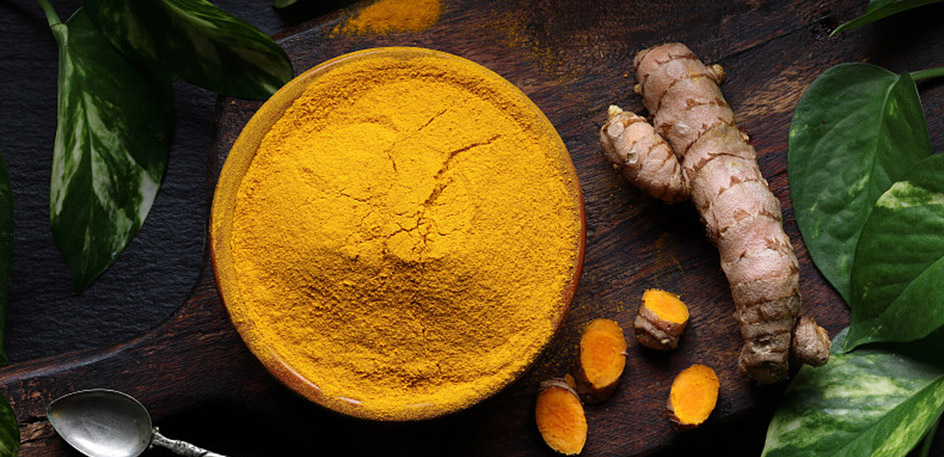
Curcumin, also known as turmeric pigment or acid yellow, is a natural phenolic antioxidant extracted from the roots and stems of ginger plants such as turmeric, turmeric, mustard, curry, and turmeric. Its main chain consists of unsaturated aliphatic and aromatic groups, and it is a diketone compound. It is a commonly used seasoning and edible pigment, non-toxic, with a chemical formula of C21H20O6.
Curcumin ist eine natürliche Verbindung, die gute entzündungshemmende und krebshemmende Eigenschaften hat. Unter ihnen enthält Kurkuma etwa 3% bis 6% Curcumin, ein seltenes Pigment mit Diketonstruktur in der Pflanzenwelt. Curcumin ist orangegelbes kristallines Pulver, schmeckt leicht bitter, unlöslich in Wasser, in der Lebensmittelproduktion wird hauptsächlich für Darmprodukte, Konservenprodukte, Soßen und andere Produktfärbung verwendet. Curcumin hat die Auswirkungen der Senkung der Blutfette, Anti-Tumor, Anti-Entzündung, Gallenblase, Antioxidans, etc. Darüber hinaus haben einige Wissenschaftler herausgefunden, dass Curcumin helfen kann, drogenresistente Tuberkulose zu behandeln.
Curcumin was first isolated as a low molecular weight polyphenolic compound from Curcumalonga L. in 1870. In 1910, its chemical structure of bis (feruloyl) methane was elucidated, and significant progress was made in the study of its physiological and pharmacological effects. With the deepening of research on curcumin, it has been found that it has a wide range of pharmacological activities, such as anti-inflammatory, antioxidant, lipid regulating, anti-virus, anti infection, anti-tumor, anticoagulant, anti liver fibrosis, anti atherosclerosis, and low toxicity and small adverse reactions.
Curcumin is currently one of the world's best-selling natural food colorants and is a food additive approved for use by the World Health Organization, the US Food and Drug Administration, and multiple countries. What attracts researchers is not only curcumin as a nonsteroidal anti-inflammatory drug, but also its wide range of preventive properties against diseases due to its chemopreventive properties. Given that modern medical research has found that the occurrence of numerous diseases in the human body is related to the formation of free radicals and the involvement of inflammatory reactions, the antioxidant activity and anti-inflammatory effects of curcumin have attracted widespread attention from scholars at home and abroad.
Medicine
Turmeric is a commonly used medicine, and its main bioactive components are curcumin and volatile oils. The former has the effects of lowering blood lipids, anticoagulation, antioxidation, choleretic, anti-cancer, etc; The latter mainly has anti-inflammatory, antibacterial, and cough stopping effects. Curcumin exerts its anti-cancer effects by inducing differentiation of malignant tumor cells, inducing apoptosis of tumor cells, and inhibiting tumor growth at various stages, and has a wide range of clinical applications.
1. Anti cancer Curcumin is a plant polyphenol extracted from turmeric and the most important active ingredient for turmeric to exert pharmacological effects. In recent years, research has not only demonstrated the traditional effects of turmeric, but also revealed some new pharmacological effects, such as anti-inflammatory, antioxidant, oxygen free radical scavenging, anti human immunodeficiency virus, liver and kidney protection, anti fibrosis, and anti-cancer effects, which may be related to its inhibition of the activation and expression of transcription factors such as nuclear factor kappa B and activator protein-1, without significant toxic side effects.
2. Senile dementia Animal experiments at Duke University in the United States have shown that curcumin in curry not only breaks down amyloid protein in the brains of experimental mice, but also prevents its formation. Researchers have pointed out that eating curry regularly may also have similar effects on people, thereby helping to prevent dementia in old age.
Many studies have shown that the accumulation of amyloid protein in the brain is one of the main causes of Alzheimer's disease. Previous studies have shown that curcumin, a key ingredient in curry, has the effect of preventing brain nerve cell damage and improving brain nerve cell function.
According to US media reports, researchers at Duke University have genetically modified experimental mice to produce many amyloid proteins in their brains. The researchers subsequently provided these experimental mice with a food rich in curcumin, and found that the amyloid protein in the brains of the mice was broken down. The same diet also prevented the development of amyloid protein in the brains of adult mice.
3. Anti inflammatory Inflammation is a complex process triggered by cellular infection and/or tissue damage, resulting in a series of chain reactions that ultimately lead to the rapid development of certain chronic diseases. Given that inflammation plays an important role in most chronic diseases, anti-inflammatory drugs are needed for prevention. Although some different steroidal and nonsteroidal anti-inflammatory drugs such as celecoxib, aspirin, ibuprofen, prednisone, etc. can be used to treat inflammatory diseases, most of them have side effects. Research has found that the anti-inflammatory activity of curcumin is comparable to that of steroidal and nonsteroidal drugs, such as indomethacin and prednisone, and is generally safe in most cases.